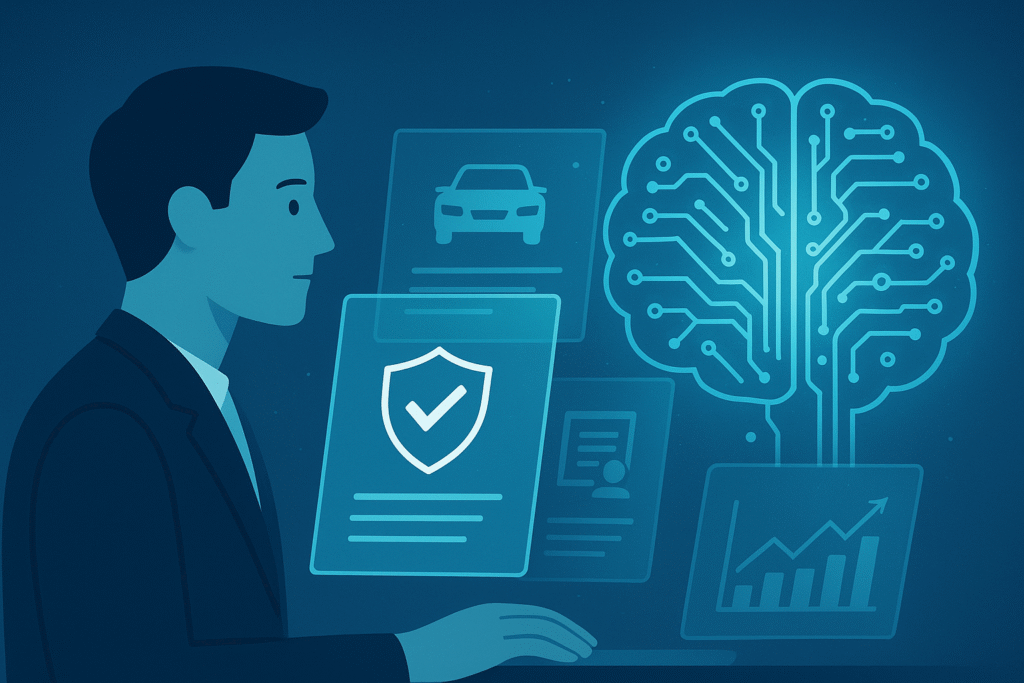
AI in Insurance : The insurance industry has always faced one big challenge — fraudulent claims. From fake accident reports to exaggerated losses, insurance fraud costs billions every year. But today, things are changing fast. With Artificial Intelligence (AI), companies are learning how to detect fraud automatically, saving time, money, and resources.
In this article, you’ll learn how AI helps insurance companies spot fake claims, analyze risk patterns, and improve customer trust in 2025 and beyond.
1. The Growing Problem of Insurance Fraud
Insurance fraud happens when people intentionally provide false information to get money or benefits they don’t deserve. This can include:
- Staging fake accidents
- Inflating repair bills
- Submitting false medical reports
- Using stolen identities
According to industry reports, global insurance fraud losses exceed $80 billion annually. For insurers, this means higher operational costs and increased premiums for honest customers. That’s why technology, especially AI, has become the key weapon against fraud.
2. How AI is Changing the Insurance Industry
Artificial Intelligence allows computers to analyze massive amounts of data — far more than any human investigator could. AI models can recognize patterns in claim data, customer behavior, and even voice recordings to flag suspicious activity.
AI tools in insurance include:
- Machine learning algorithms to detect unusual patterns
- Natural language processing (NLP) to read claim reports and spot inconsistencies
- Predictive analytics to identify risk-prone profiles
- Image recognition to verify photo-based evidence
These technologies are helping insurers move from reactive to proactive fraud detection.
3. Detecting Fraud Before It Happens
Traditional fraud detection relied on checking claims after they were filed. But AI helps identify fraud before payments are made.
For example:
- AI can compare a customer’s new claim with their previous history, social data, or public records.
- If an accident photo appears on multiple claims, image recognition tools flag it automatically.
- Machine learning models score each claim based on fraud probability, helping adjusters prioritize investigations.
This means faster claim processing for honest users — and early detection of dishonest ones.
4. Real-Life Use Cases
Let’s look at how AI is already working in insurance companies worldwide:
- Car Insurance: AI-powered cameras and apps verify accident photos instantly to check if damages match the reported incident.
- Health Insurance: AI reviews thousands of medical claims to find duplicate or forged reports.
- Life Insurance: Predictive analytics detect abnormal beneficiary patterns or false documents.
- Home Insurance: Drones combined with AI assess property damage, preventing false weather claims.
Each of these examples saves insurers millions of dollars — and helps ensure fair payouts to genuine policyholders.
5. AI-Powered Claims Analysis
One of AI’s biggest advantages is its speed. A human agent might take hours to review a single claim, while AI can analyze thousands in seconds.
AI models look for:
- Duplicate documents
- Suspicious claim timing
- Mismatched data (e.g., claim date vs. repair receipt date)
- Language patterns in customer statements
When AI detects anomalies, it sends alerts to human investigators who make the final decision. This partnership between AI + human intelligence creates a powerful fraud prevention system.
6. The Role of Big Data and Machine Learning
AI works best when it has large amounts of quality data. Insurance companies collect data from:
- Claim forms
- Customer profiles
- Social media
- IoT devices (like car sensors and smartwatches)
Machine learning models then train themselves on this data, learning what “normal” looks like — and what fraud looks like. Over time, these systems become more accurate and harder for fraudsters to deceive.
7. Improving Customer Trust
AI doesn’t just reduce fraud — it also improves customer satisfaction.
When honest customers see that claims are approved quickly and fairly, they trust the company more. AI-based systems help:
- Reduce claim processing time
- Offer personalized policies
- Prevent unnecessary investigations for genuine customers
This transparency increases brand loyalty and builds a stronger relationship between insurer and customer.
8. Challenges and Ethical Concerns
While AI offers big benefits, it also brings challenges:
- Privacy: AI systems handle sensitive data, so insurers must ensure data security.
- Bias: If the training data is biased, AI might wrongly flag legitimate claims.
- Transparency: Customers should know how AI decisions are made.
Responsible AI usage means balancing automation with human oversight to ensure fairness and accountability.
9. The Future of AI in Insurance (2025 and Beyond)
By 2025, AI in insurance is expected to grow by over 40% annually. Future innovations may include:
- Voice-based fraud detection using tone analysis
- Blockchain integration for tamper-proof claim data
- AI chatbots for faster claim communication
- Predictive fraud analytics integrated into every step of the insurance journey
With these tools, fraud will become harder to hide — and insurance will become faster, fairer, and more secure for everyone.
FOR MORE: Travel Insurance: What’s Covered and What’s Not, Secure Your Rental with Top-Rated Renters Insurance




I really like what you guys are usually up too. Such clever work and coverage! Keep up the terrific works guys I’ve added you guys to my personal blogroll.
I every time spent my half an hour to read this blog’s articles daily along with a mug of coffee.