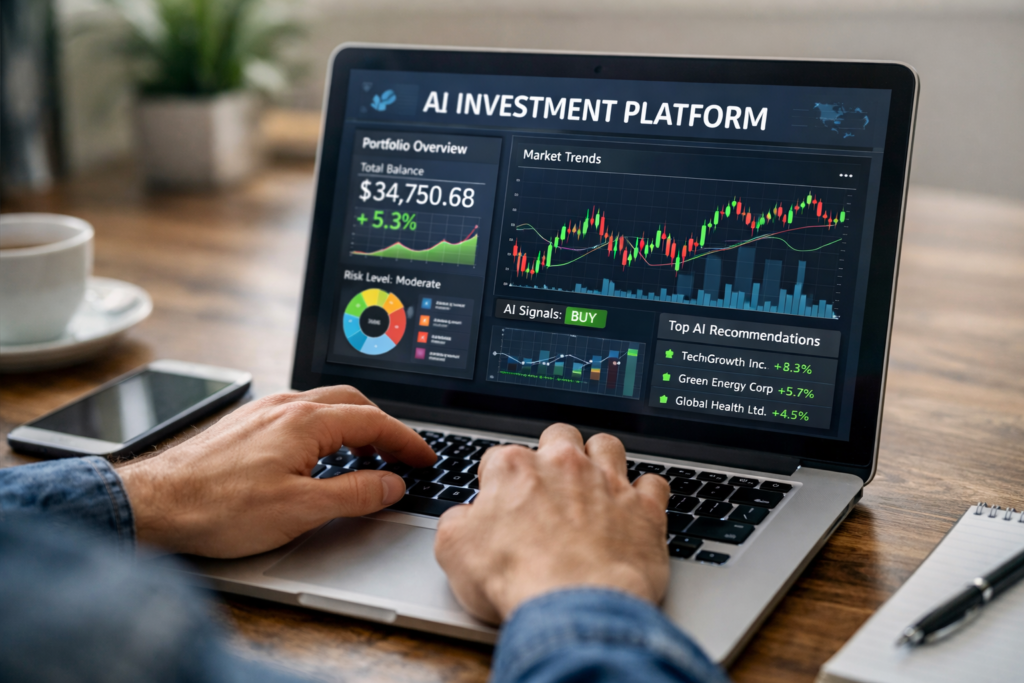
Artificial intelligence is transforming the financial world. In 2026, investing is no longer limited to professional traders or financial analysts. Thanks to AI-powered platforms, beginners can now analyze markets, manage portfolios, and make informed decisions with the help of advanced technology.
AI investment tools use machine learning, data analysis, and predictive algorithms to identify patterns in financial markets. These platforms can process massive amounts of data within seconds, helping investors find opportunities that might otherwise be missed.
For beginners who want to start investing with confidence, AI tools offer guidance, automation, and smarter strategies. In this article, we explore the top AI-based investment tools that are making investing easier and more accessible in 2026.
Why AI Investment Tools Are Popular in 2026
The popularity of AI-driven investing platforms has grown rapidly over the past few years. One major reason is that traditional investing requires significant knowledge, time, and research.
AI tools simplify this process.
Instead of manually analyzing charts, economic reports, and company performance, AI systems gather and analyze data automatically. This allows investors to focus on making strategic decisions rather than spending hours researching the market.
Some key benefits of AI investment tools include:
- Automated portfolio management
- Data-driven investment insights
- Reduced emotional decision-making
- Faster market analysis
- Personalized investment strategies
These features make AI tools especially valuable for beginners who may not yet have extensive experience in financial markets.
- Robo-Advisors for Automated Portfolio Management
Robo-advisors are among the most popular AI-powered investment tools available today. These platforms automatically create and manage investment portfolios based on a user’s financial goals, risk tolerance, and investment timeline.
For beginners, robo-advisors offer a simple way to start investing without needing deep knowledge of the stock market.
Once an investor answers a few questions about their financial situation and goals, the AI system builds a diversified portfolio that may include stocks, bonds, and exchange-traded funds.
The platform continuously monitors the portfolio and rebalances it when necessary. This ensures that the investment strategy remains aligned with the user’s long-term objectives.
- AI Stock Analysis Platforms
AI-powered stock analysis tools help investors identify promising stocks using advanced data analysis.
These platforms analyze factors such as:
- historical stock performance
- financial statements
- market trends
- global economic indicators
- investor sentiment
By processing thousands of data points, AI systems can highlight stocks with strong growth potential.
For beginners, this kind of analysis can provide valuable insights that would otherwise require years of market experience. Many AI tools also present their recommendations in simple dashboards, making complex data easier to understand.
- AI Portfolio Optimization Tools
Portfolio optimization is one of the most important aspects of successful investing.
AI portfolio tools analyze how different assets perform together and recommend adjustments that improve diversification.
These systems continuously monitor market conditions and adjust allocations when necessary.
For example, if market volatility increases, the AI may recommend shifting investments into more stable assets. If growth opportunities appear in certain sectors, the system can suggest increasing exposure to those areas.
This dynamic approach helps beginners maintain balanced portfolios without constant manual adjustments.
- AI-Powered Trading Assistants
Trading assistants powered by artificial intelligence help investors make better buy and sell decisions.
These tools provide:
- market trend predictions
- entry and exit signals
- risk management suggestions
- portfolio performance insights
AI trading assistants use predictive algorithms to analyze price movements and historical patterns. While no system can predict the market perfectly, these tools help investors make more informed decisions.
For beginners who are learning how markets behave, AI assistants can serve as educational tools while also providing practical guidance.
- AI Financial Planning Platforms
Another important category of AI investment tools focuses on long-term financial planning.
These platforms analyze a user’s income, expenses, savings, and financial goals to create personalized investment plans.
For example, AI systems can help users plan for:
- retirement savings
- education funds
- long-term wealth building
- passive income strategies
By analyzing financial data and forecasting future scenarios, these platforms help beginners develop structured investment plans that align with their life goals.
How Beginners Should Choose an AI Investment Tool
With many AI investing platforms available, choosing the right one can feel overwhelming. Beginners should consider several key factors before selecting a tool.
Ease of Use
A beginner-friendly interface is essential. The platform should present financial information clearly and provide simple navigation.
Transparency
Investors should understand how the AI system makes recommendations. Transparent algorithms and clear explanations build trust.
Risk Management
Good platforms provide risk analysis and portfolio protection features that help users avoid unnecessary losses.
Fees and Costs
Some AI platforms charge management fees or subscription costs. Beginners should compare these fees before committing to a service.
Educational Resources
Platforms that include tutorials, learning tools, and financial education resources can be especially helpful for new investors.
Risks of AI Investing
Although AI investment tools offer many advantages, they are not completely risk-free.
Financial markets are influenced by many unpredictable factors such as geopolitical events, economic changes, and investor psychology. AI systems rely on historical data and algorithms, which means they cannot always anticipate sudden market shifts.
Beginners should remember that AI tools are designed to assist decision-making, not replace human judgment entirely.
Diversification, careful planning, and realistic expectations remain essential components of successful investing.
The Future of AI Investing
Artificial intelligence will continue to play a major role in shaping the future of financial markets.
In the coming years, AI systems are expected to become even more sophisticated. They may integrate real-time economic data, global market signals, and advanced predictive modeling to provide even deeper insights.
For beginners, this means investing will become more accessible, efficient, and personalized.
Instead of relying solely on traditional financial advisors, investors will increasingly use intelligent platforms that combine automation with human strategy.
Final Thoughts
AI-based investment tools are transforming the way people approach the stock market. For beginners in 2026, these platforms offer powerful advantages including automated portfolio management, data-driven insights, and simplified financial planning.
By choosing reliable tools, maintaining diversified portfolios, and focusing on long-term financial goals, beginners can use artificial intelligence to make smarter investment decisions and navigate the evolving world of modern finance.
FOR more : AI in Insurance: How Artificial Intelligence Reduces Fraud, Travel Insurance: What’s Covered and What’s Not, Secure Your Rental with Top-Rated Renters Insurance